
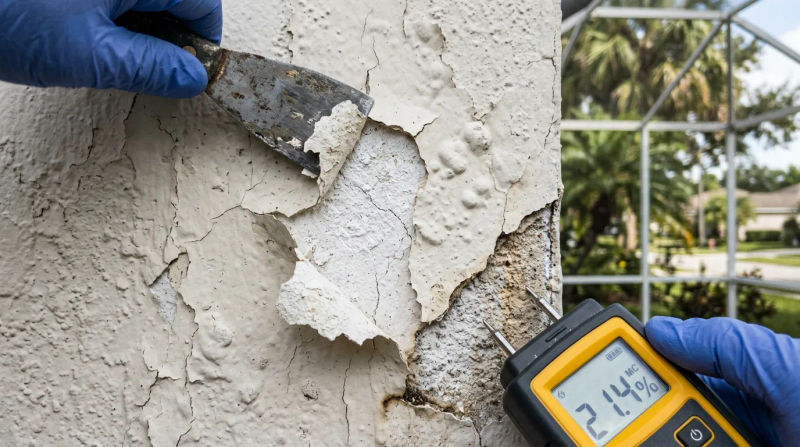
You step outside to enjoy the cooler, drier air that October brings to Town 'n' Country and notice something concerning on your home's exterior. The paint that looked fine all summer is now starting to chip, bubble, or peel away in spots. It’s a frustrating sight, but a common one here in Florida. The intense summer sun and relentless humidity put exterior coatings to the ultimate test, and as the season changes, the damage often becomes more apparent. That peeling paint isn't just a cosmetic issue; it's a sign that your home's first line of defense against the elements is failing. Understanding why it happens is the first step toward a lasting solution.
As a project supervisor with over a decade of experience in the field, I’ve seen firsthand what causes paint to fail and what it takes to ensure a durable, beautiful finish. Let's break down the common signs, the underlying causes, and when it’s time to bring in an expert.
Common Signs and Symptoms
Peeling exterior paint doesn't always look the same. The specific appearance can tell you a lot about the potential cause. When our technicians perform an initial inspection, we look for these distinct patterns of failure:
- Flaking or Chipping: You’ll see small, brittle pieces of paint breaking off the surface. This is common on wood trim, window sills, and siding. It often indicates that the paint has become old and lost its flexibility due to sun exposure.
- Blistering or Bubbling: These are pockets of paint that have lifted off the surface, forming a bubble. If you were to pop one, you might find either moisture or air trapped underneath. This is a classic symptom of blistering paint humidity Florida exterior conditions, where moisture from within the wall or high ambient humidity gets trapped behind the paint film.
- Alligatoring: This type of failure looks exactly like it sounds - a cracked pattern resembling the scales on an alligator's back. It typically happens when a rigid topcoat is applied over a more flexible one, or when paint ages and loses its elasticity. It’s a sure sign the coating is at the end of its life.
- Peeling in Sheets: This is the most dramatic form of paint failure, where large sections of paint detach from the surface below. It almost always points to a severe lack of adhesion, meaning the surface was not properly prepared before the paint was applied. You might see this on concrete block walls or previously painted siding where the old and new coats didn't bond.
What Causes This Problem
Paint failure is rarely caused by just one thing. In a climate like ours, it's usually a combination of factors. Here are the seven most common culprits we encounter on job sites throughout the Town 'n' Country area.
- Moisture Intrusion: This is the primary enemy of any paint job in Florida. Water can get behind your paint from clogged gutters, failed caulking around windows and doors, or even from moisture wicking up from the ground. The constant cycle of sun-baking followed by sudden downpours creates significant exterior paint adhesion problems after rain, as trapped moisture turns to vapor and pushes the paint right off the wall.
- Inadequate Surface Preparation: A lasting paint job is 90% preparation. Simply pressure washing a surface isn't enough. If dirt, chalky residue from old paint, mildew, or grease isn't completely removed, the new paint will stick to the contaminants instead of the house. Our crews follow a rigorous process of cleaning, scraping, and sanding to create a clean, dull, and dry surface that is ready to accept a new coating.
- Painting on a Damp Surface: In our humid environment, surfaces can feel dry to the touch but still hold significant moisture. Painting over a damp wall - whether it's concrete block, wood, or siding - traps that moisture. As the sun heats the wall, the water vaporizes and creates blisters. Experienced professionals use moisture meters to confirm a substrate is truly dry before a single drop of primer is applied.
- Using the Wrong Paint or Primer: Not all paints are created equal. Using an interior-grade paint on an exterior surface is a recipe for rapid failure. Similarly, applying a new latex paint over an old, oil-based paint without the correct bonding primer will cause widespread peeling. For the 1950s concrete block ranch homes common in Town 'n' Country, using a high-quality, alkali-resistant primer and a 100% acrylic latex topcoat is essential for durability.
- Intense Sun and Heat: The relentless Florida sun bombards exterior paint with UV radiation, which breaks down its binders and pigments over time. This makes the paint brittle and prone to cracking and flaking, especially on south- and west-facing walls that receive the most direct sunlight.
- Age and Multiple Paint Layers: Many homes, particularly the classic post-war structures in this area, have accumulated many layers of paint over the decades. Eventually, the sheer weight and inflexibility of these built-up layers cause the oldest layer to lose its grip on the original substrate, resulting in peeling that takes all subsequent coats with it.
- Skipping Primer: Primer serves two critical functions: it ensures adhesion and it seals the surface. Painting directly over bare wood, new stucco, or a chalky surface without the right primer is a common shortcut that leads to peeling. Primer creates a uniform, stable foundation for the topcoat to bond with effectively.
When to Call a Professional
Figuring out why paint peels on siding Town 'n' Country homes can be complex, and deciding whether to tackle it yourself is an important consideration.
A small, isolated area of flaking on a mailbox post or a low fence might be a manageable DIY project if you're willing to do the thorough prep work required. However, in most cases, peeling exterior paint is a job best left to experienced professionals. You should strongly consider calling for an expert opinion if you see:
- Widespread Failure: If peeling, blistering, or cracking is happening on more than one wall or across large sections, it indicates a systemic problem that a quick patch job won't fix.
- Safety Concerns: If your home was built before 1978, the peeling paint may contain lead. Disturbing it without proper containment and safety protocols is hazardous. A certified professional is trained to handle this safely.
- Height and Accessibility Issues: Peeling on second stories, gables, or soffits requires ladders and safety equipment that most homeowners don't have and aren't trained to use safely.
- Signs of Moisture: If you see blisters or peeling near windows, doors, or rooflines, it's crucial to have a professional diagnose the source of the water intrusion. Simply painting over it will only trap the moisture and lead to wood rot or stucco damage.
- You Want a Lasting Result: A professional painting crew has the tools, standardized workflows, and expertise to diagnose the root cause, perform meticulous preparation, and apply the right coatings for a durable finish that is often backed by a warranty.
Conclusion
Peeling exterior paint is more than an eyesore; it's a critical maintenance warning. It signals that your home's protective layer has been breached, leaving the underlying wood, stucco, or siding vulnerable to moisture, rot, and further deterioration. The key takeaways are that proper surface preparation is non-negotiable, moisture is the number one cause of failure in our climate, and using high-quality, region-appropriate materials is essential.
Acting early when you first spot signs of trouble can prevent a small issue from becoming a large and expensive repair project. Don't wait for the peeling to get worse.
If you notice any of these signs, contact a local Painting professional for an inspection. An expert can accurately diagnose the cause of the failure and recommend a comprehensive solution to protect and beautify your home for years to come.