
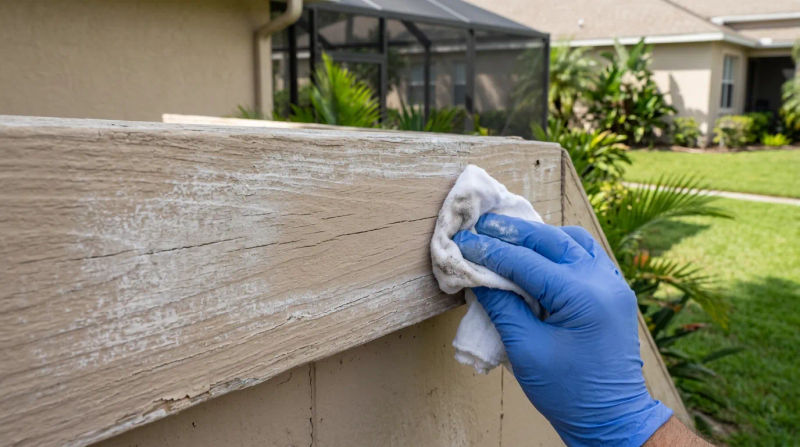
Have you ever run your hand along your home’s siding on a cool October day, only to find your fingers coated in a fine, powdery residue? Here in Northdale, after a long, humid summer of intense sun, it’s a common experience. Many homeowners assume it’s just accumulated dust or dirt. However, that chalky film could be a clear signal that your exterior paint is beginning to fail. As a senior painting project supervisor with over a decade of experience in the Tampa Bay area, I’ve seen firsthand how our climate impacts home exteriors. Understanding the difference between normal weathering and a compromised paint job is key to protecting your investment.
This fall, as the air becomes a little drier, is the perfect time to inspect your home’s exterior. That powdery substance is likely exterior paint chalking, a process where the paint’s binder breaks down, leaving behind loose pigment particles. Let's explore what this means for your home and what you should do about it.
Common Signs and Symptoms
Identifying chalking is straightforward once you know what to look for. The most obvious sign is the one we’ve already discussed: a chalky, dusty substance that comes off on your hand or a dark cloth when you wipe the surface. But there are other, more subtle indicators.
- A Dull, Faded Appearance: One of the first things homeowners notice is that their home’s color looks washed out or flat, especially on the sides that receive the most direct sunlight. This is often described as the paint looking dusty even after a rainstorm. This addresses the common question of why exterior paint looks dusty in humid weather - the moisture can temporarily mask the chalky residue, but as the surface dries, the powdery pigment becomes visible again.
- Uneven Color: Chalking doesn't always happen uniformly. You might see streaks or blotchy areas where the color appears lighter. This is particularly noticeable on homes with darker or more vibrant paint colors, as the white or light-colored pigment residue creates a stark contrast.
- Distinguishing Fading from Chalking: It's important to understand stucco paint fading vs chalking symptoms. While they often occur together, they are different processes. Fading is the lightening of the paint's color due to UV exposure, affecting the pigment itself. Chalking is the degradation of the paint film, which releases the pigment particles. A simple test can help differentiate them: if you can wipe away the dullness to reveal a slightly richer color underneath, you're dealing with chalking. If the color is uniformly lighter and can't be wiped away, it's primarily fading. In most cases of significant wear, you're seeing a combination of both.
For homeowners with chalky paint on siding Northdale, this is a frequent issue on stucco, wood, and composite siding. The intense Florida sun is the primary driver, relentlessly breaking down the paint's protective binders.
What Causes This Problem
Exterior paint is more than just color; it's a protective shield for your home. This shield is composed of pigments (for color), binders (resins that hold the pigments and adhere to the surface), and solvents (which evaporate as the paint dries). Chalking occurs when the binders, the very glue of the paint film, begin to break down.
- UV Radiation: This is the number one enemy of exterior paint. The sun’s ultraviolet rays attack the chemical bonds in the paint's resin, causing them to deteriorate. Over time, the binder erodes, releasing the pigment particles it was once holding in place. This is why the sun-exposed walls of a house almost always show signs of chalking first.
- Low-Quality Paint: Not all paints are created equal. Bargain or contractor-grade paints often contain fewer, lower-quality binders and a higher ratio of pigment. While they may look good initially, they lack the durability to withstand years of Florida’s harsh sun and humidity, leading to premature chalking and fading.
- Paint Type: Oil-based (alkyd) paints are known to chalk more significantly as they age compared to modern, high-quality 100% acrylic latex paints. The binders in acrylic resins are engineered to be far more resistant to UV degradation.
- Improper Surface Preparation: You can’t just paint over a heavily chalked surface. If the previous paint job was applied without properly cleaning and sealing the old, chalky layer, the new paint will have a weak foundation. It won't adhere correctly and will likely fail quickly, peeling or resuming chalking in a short time.
- Building Era Considerations: Many homes in the Northdale area were built in the 1970s, often featuring single-story ranch-style architecture with stucco or wood siding. These materials have their own unique needs. If a paint not specifically formulated for masonry or a lower-quality coating was used on these surfaces in the past, chalking can become a significant issue sooner than expected.
When to Call a Professional
So, you’ve identified chalking on your home. What’s the next step? A small amount of light chalking can be a normal part of the aging process for some paints and can often be removed with a good cleaning.
However, if you notice any of the following, it’s time to consult with experienced professionals:
- Heavy or Rapidly Returning Chalking: If the powdery residue is thick, widespread, or comes back shortly after you wash the area, it’s a definitive sign that the paint film has failed. Its protective qualities are gone, and your siding is becoming vulnerable.
- Visible Erosion of the Paint Film: In advanced cases, you may see the paint becoming thin, revealing the texture of the siding or even the primer underneath. At this stage, the home is not adequately protected from moisture.
- You're Planning to Repaint: This is the most critical time to involve a professional. Simply painting over a chalky surface is a recipe for failure. A qualified team will follow a standardized process to ensure a durable, long-lasting finish. Our technicians, for example, would begin with a thorough pressure wash using appropriate cleaning agents to remove all chalk, dirt, and mildew. After rinsing and allowing the surface to dry completely, we assess if a specialized sealer-primer is needed to bind any remaining microscopic chalk residue before applying premium topcoats. This preparation is non-negotiable for a quality paint job.
Attempting to handle heavy chalk removal and surface prep as a DIY project can be difficult and even damaging if done incorrectly. High-pressure washing can harm siding, and failing to remove all the residue will compromise your new paint job from day one.
Conclusion
That dusty powder on your home's exterior is more than a cosmetic nuisance; it's a clear sign that your paint is aging and its protective capabilities are diminishing. While some light exterior paint chalking is normal over time, heavy or widespread chalking indicates that the paint film has reached the end of its service life. This is especially common on Northdale homes that have endured years of intense sun and humidity.
By taking a few minutes this fall to inspect your siding, you can catch this issue early. Addressing paint failure proactively not only restores your home's curb appeal but, more importantly, reinforces the protective barrier that shields your siding from the elements. Waiting until the problem worsens can lead to more extensive and costly repairs down the road.
If you notice any of these signs, contact a local house painter for an inspection. A qualified professional can assess the condition of your paint, determine the cause, and recommend the right preparation and materials for a lasting solution.