
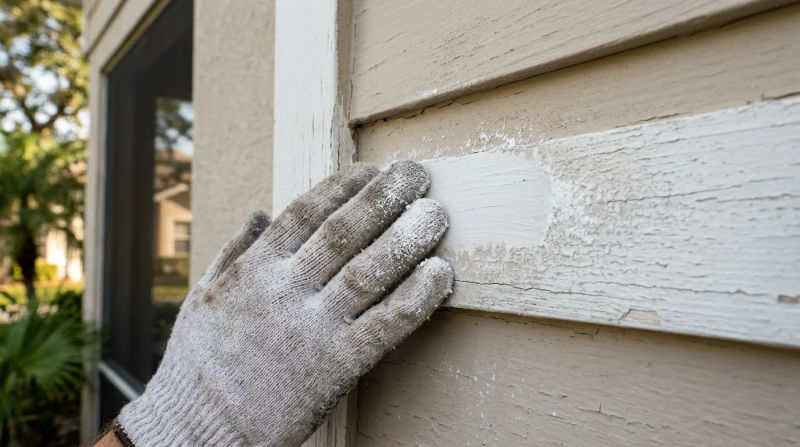
Have you ever leaned against your house on a sunny afternoon only to stand up and find a chalky, white film on your clothes? Or perhaps you’ve noticed a dull, faded look to your home’s exterior that wasn’t there a few years ago. If this sounds familiar, you’re likely seeing a common issue we encounter frequently in the field: paint chalking.
As a Senior Painting Project Supervisor, I’ve seen this phenomenon on countless homes across Florida. Especially here in Lake Magdalene, our unique combination of intense sun and high humidity creates the perfect environment for it. With October’s drier air settling in, this powdery residue often becomes more noticeable, making it an ideal time to assess the health of your home's exterior coating. Understanding what causes it and how to address it is the first step in protecting your investment.
Common Signs and Symptoms
Identifying chalking exterior paint is usually straightforward once you know what to look for. It’s more than just accumulated dust. Here are the most common signs our technicians are trained to spot during an initial inspection.
- The Wipe Test: This is the definitive test. Take a dark-colored rag or even just your fingertip and wipe it across a section of your siding or trim. If it comes away with a fine, powdery substance resembling chalk dust, you have paint chalking. This helps answer the question of how to tell paint chalking vs dirt; dirt will often feel gritty and may smear, whereas chalking is a uniform, soft powder.
- Dull, Faded Color: One of the earliest signs is a noticeable loss of vibrancy. The paint’s binder is breaking down, releasing the pigment particles. A once-vibrant blue may look like a hazy sky blue, or a deep tan may appear washed out. This effect is often most pronounced on walls that receive the most direct sunlight.
- Light-Colored Streaking: After a rain shower, look for white or light-colored streaks running down from painted areas onto other surfaces, like brick foundations, window screens, or concrete patios. This is the rain washing the loose, chalky pigment down the side of your house.
- A Hazy or Powdery Sheen: Stand back from your home and look at the surface from an angle, especially in bright sunlight. A chalking surface will often have a dull, hazy appearance instead of the clean sheen it had when freshly painted.
- Residue on Adjacent Surfaces: Check the ground or landscaping directly beneath your exterior walls. A fine layer of light-colored dust on mulch, pavers, or plant leaves can be an indicator that the paint above is shedding its pigment.
- Uneven Appearance: The Lake Magdalene chalking on house paint we see is rarely uniform. Because of our intense sun, the south- and west-facing walls typically show signs of chalking long before the more shaded north and east sides.
What Causes This Problem
To understand chalking, it helps to know the basic components of paint: pigments (for color), binders (the resin or “glue” that holds pigments together and adheres to the surface), and a solvent (the liquid that evaporates as the paint dries). Chalking is, quite simply, the failure of the paint’s binder.
Here are the primary causes:
1. UV Radiation and Weather Exposure: This is the number one culprit. The sun’s powerful ultraviolet (UV) rays relentlessly attack the paint’s binder. Over time, this radiation breaks down the chemical bonds in the resin. Once the binder degrades, the pigment particles are no longer held securely in the paint film and are released to the surface, forming that powdery residue on exterior paint Florida homeowners know all too well. The constant cycle of sun, rain, and humidity in our area significantly accelerates this process.
2. The Quality of the Paint: Not all paints are created equal. Lower-quality exterior paints often use cheaper binders that have poor UV resistance. They may look good initially but will begin to chalk and fade much faster than a premium-quality acrylic latex paint. Investing in a high-quality coating with durable binders is critical for long-term performance in our harsh climate.
3. Paint Type: In the past, certain oil-based paints were known for chalking as a way to “self-clean.” However, modern acrylic latex formulations are designed for superior durability and color retention. If your home hasn't been painted in a decade or more, you may be seeing the end-of-life effects of an older paint technology.
4. Improper Surface Preparation: A successful paint job is built on a solid foundation. If a new coat of paint was applied over a previously chalking surface without thorough cleaning and preparation, the new paint can’t form a strong bond. It will fail prematurely, often by chalking or peeling away from the dusty layer beneath it.
Many homes in the Lake Magdalene area, especially the beautiful Neo-eclectic residences built in the 1980s, present unique challenges. These properties often feature complex rooflines, arched windows, and a mix of materials like stucco and wood trim. Each surface and angle receives different levels of sun exposure, which can cause chalking to appear on a dormer or prominent entryway long before it shows up on a shaded porch wall. Proper diagnosis requires looking at the home as a complete system.
When to Call a Professional
So, you’ve done the wipe test and confirmed you have chalking. What’s next? The answer depends on the severity.
A very light degree of chalking can be a normal part of the aging process for some paints. However, it’s always a signal that the paint film is degrading and nearing the end of its protective lifespan.
Heavy chalking is a different story. This is a clear sign that the paint is no longer providing adequate protection to the underlying material (wood, stucco, etc.). At this stage, simply painting over it is a recipe for failure. The new paint will adhere to the loose powder, not the solid surface, and will likely peel or blister within a year or two.
This is where the expertise of an experienced professional becomes invaluable. Our standardized process for handling chalking is meticulous because we know it’s the only way to ensure a lasting finish. Here’s why professional intervention is crucial:
- Proper Cleaning: Removing heavy chalk requires more than a garden hose. It demands pressure washing at a specific PSI with appropriate, environmentally safe cleaning solutions to completely remove the failed paint layer without damaging the substrate.
- Surface Sealing: After cleaning, the surface can still be porous and chalky. A professional crew will apply a specialty primer, often called a conditioner or sealer, designed to penetrate the surface, bind any remaining chalk, and create a stable, uniform foundation for the topcoats.
- Correct Product Selection: An expert can identify the right paint system - primer and topcoats - for your home’s specific materials and the severe Florida climate. They will recommend a premium 100% acrylic latex paint with proven UV resistance to prevent the issue from recurring prematurely.
Conclusion
Seeing that powdery residue on your home’s exterior is more than a cosmetic nuisance; it's a clear signal that your paint's protective layer is breaking down. While it’s a common issue, especially in sun-drenched climates like ours, ignoring it can leave your home’s siding or stucco vulnerable to the elements.
Remember, the key to solving a chalking exterior paint problem is not just applying a new coat of paint - it’s the meticulous preparation performed beforehand. Removing the failed layer and properly sealing the surface are non-negotiable steps for a durable, beautiful finish that will stand up to the Florida sun for years to come. Don't wait for the problem to worsen.
If you notice any of these signs, contact a local house painter for an inspection.